



This post may contain affiliate links. If you purchase through these links, we may earn a small commission at no additional cost to you. As an Amazon Associate we earn from qualifying purchases.
Mornings have a funny way of turning into a relay race you never signed up for.
You wake up with good intentions — maybe you’ll stretch, make a proper breakfast, answer emails calmly. Then suddenly it’s 9:12 a.m., you’re looking for your keys like they’ve personally betrayed you, and you’re reheating coffee for the third time.
Modern life isn’t necessarily harder than before — but it is louder, faster, and filled with tiny decisions that quietly drain our energy. It’s not the big tasks that exhaust us.
It’s the hundreds of micro-choices we make every single day.
What to wear.
What to cook.
Where did I put that charger.
Do I have time to clean this now?
Here’s the good news: you don’t need a dramatic life overhaul to feel calmer and more in control. You just need simple tools that save time every day — the kind that quietly shave minutes off your routine and mental clutter off your brain.
And when chosen well, these tools aren’t just convenient — they’re genuinely worth investing in because they pay you back in time, every single day.
Let’s talk about the simple tools that make life noticeably easier.
The Real Time Thief: Decision Fatigue

Before we jump into tools, let’s name the real villain: decision fatigue.
Every time you choose something — even something tiny — your brain uses energy. By the end of the day, your ability to make decisions actually declines.
That’s why you can manage a work crisis at 10 a.m. like a boss…
…but feel completely overwhelmed deciding what to cook at 6 p.m.
These time-saving tools don’t just help you move faster. They reduce how often you have to decide things at all. They turn daily chaos into quiet systems. And systems are where calm lives — which is exactly why simple tools that save time every day can make such a noticeable difference in your mental energy.
Simple Tools That Save Time Every Day
Entryway Organization Tools That Saves Daily Minutes

Modern Statement Piece for Entryways & Tables
- Elegant pedestal bowl designed to elevate entryway tables, kitchen counters, or coffee tables
- Minimalist resin design blends beautifully with modern and contemporary decor styles
- Perfect for displaying fruit, decorative objects, keys, or small household items
- Sturdy resin construction offers durability while maintaining a refined look
- Great decorative piece for living rooms, dining areas, or hallway consoles
- Neutral stone-beige finish adds a soft, sophisticated accent to any room
The problem: Losing essentials constantly
If you’ve ever said, “I literally just had my keys,” you are deeply, spiritually not alone. Searching for misplaced items can easily eat up 10–15 minutes per day — which adds up to more than an hour every week.
The time-saving tool: An entryway drop zone tray
This is one of those small home organization items worth investing in because it eliminates a daily frustration instantly.
A simple tray near your door becomes a dedicated home for:
- Keys
- Wallet
- Work badge
- Sunglasses
- Earbuds
Why it saves so much time
Your brain thrives on predictable routines. When something always goes in the same place, you stop using mental energy to track it. No thinking required. No last-minute panic searches.
What to look for when choosing one
Look for:
- A tray with slightly raised edges so items don’t slide off
- Durable material (wood, metal, or ceramic)
- Enough size for multiple essentials without crowding
Avoid:
- Tiny decorative dishes that hold only one item
- Fabric organizers that collapse or tip over
This is a small purchase that delivers daily stress relief — the best kind of ROI — and one of the easiest entryway organization ideas that doubles as a time-saving system.
Meal Planning Tools That Reduce Mental Load
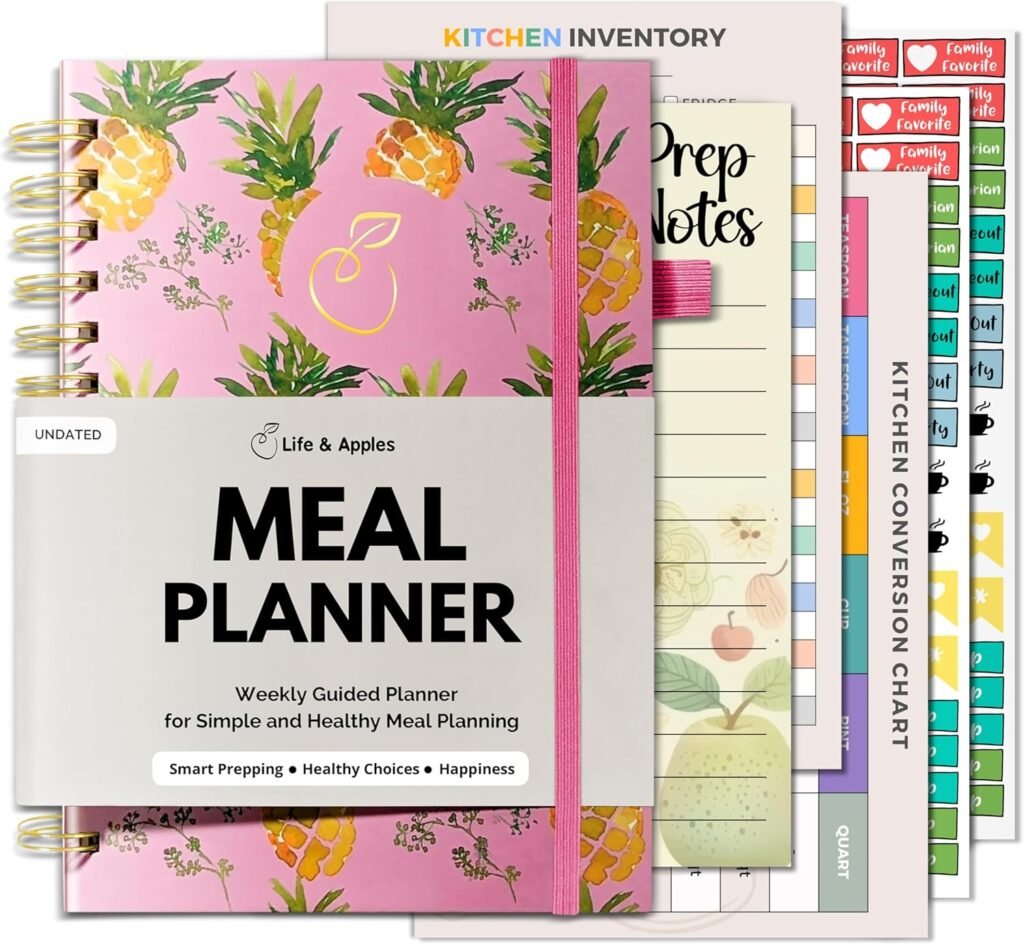
Stay Organized with a Stylish Weekly Planner
- Designed to help you plan weekly meals and stay consistent with healthy eating habits
- Includes grocery lists, meal prep guides, and nutrition tracking pages
- Undated format allows you to start planning at any time of the year
- 52-week layout helps maintain long-term organization and accountability
- Compact spiral design makes it easy to use in the kitchen or take on the go
The problem: The daily “What should I cook?” loop
Meal decisions don’t just take time — they drain mental energy, especially at the end of a long day. Without a plan, many people default to takeout simply because decision fatigue wins.
The time-saving tool: A reusable weekly meal planner
This is one of those time-saving tools that seems simple but has a surprisingly large impact. Instead of planning from scratch each week, a visual meal board or planner helps you rotate go-to meals quickly. Think of it as your personal restaurant menu.
Why it works
- You cut decision-making from daily to weekly
- You also eliminate last-minute grocery store runs and “panic ordering.”
What to look for when buying one
Look for:
- Dry-erase surfaces for easy reuse
- A layout with both meal slots and grocery list sections
- Magnetic backing for fridge placement
Avoid:
- Overly complicated planners with too many categories
- Paper-only versions that create clutter
One of the most popular options in this category is the simple magnetic meal planning tool, designed to help busy households stay organized and reduce daily decision fatigue.
Productivity Timers That Beat Procrastination
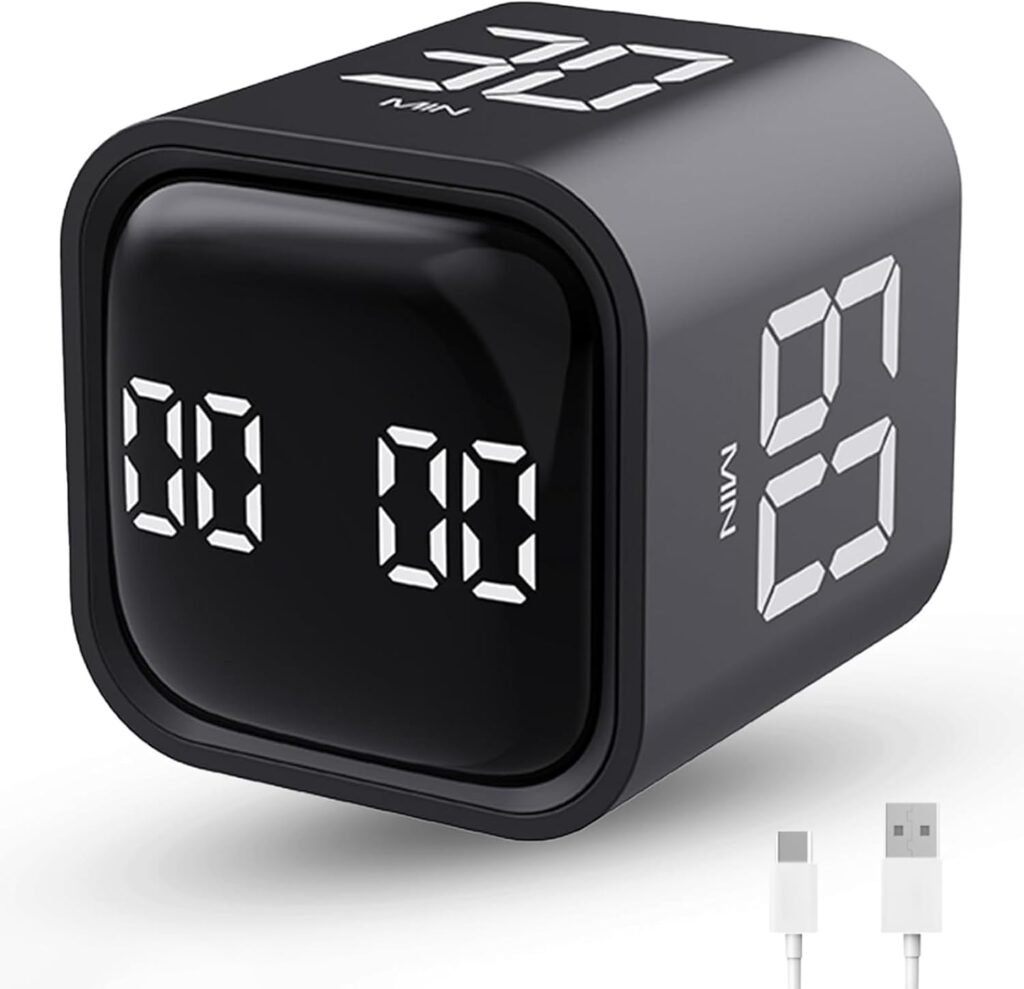
Boost Focus with a Simple Productivity Timer
- Innovative cube timer starts the countdown simply by flipping the device
- Preset time intervals make it perfect for Pomodoro sessions, study blocks, or work sprints
- Visual countdown display helps maintain focus and productivity during tasks
- Compact design fits easily on desks, making it great for home offices or classrooms
- Adjustable sound and vibration alerts keep you aware without being distracting
- Ideal for students, remote workers, ADHD productivity routines, or kitchen timing
The problem: Tasks feeling overwhelming
When something feels big or boring, the hardest part is simply starting. That resistance leads to procrastination — which quietly wastes hours.
The time-saving tool: A visual productivity timer
This is one of those items worth investing in if you struggle with focus. Unlike phone timers, visual timers show time passing physically, which creates urgency without stress.
Why it saves time
It lowers the mental barrier to starting. You commit to just 10–15 minutes — and often end up finishing the task anyway. Psychologists call this the “activation effect.” Once you start, your brain wants closure.
What to look for when choosing one
Look for:
- Silent countdown options
- Clear visual display of remaining time
- Simple, intuitive controls
Avoid:
- Loud ticking timers that increase stress
- App-only timers that tempt you to check notifications
This small tool can easily reclaim hours lost to procrastination each week — making it one of the most practical productivity tools for busy women.
Daily Planning Tools: The One-List System
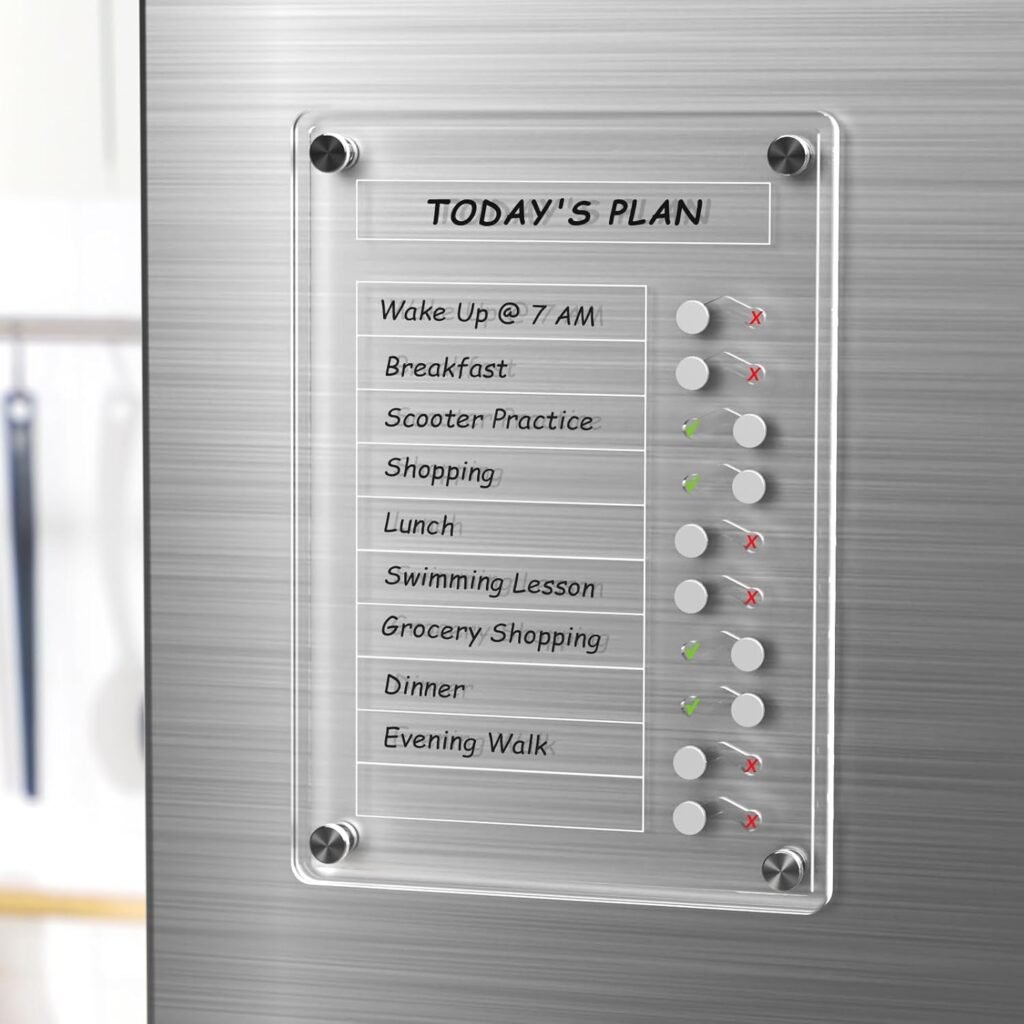
A Simple Way to Organize Daily Family Tasks
- Clear acrylic board provides a clean and modern way to track daily routines
- Magnetic design easily attaches to refrigerators or other metal surfaces
- Sliding task markers help visualize progress throughout the day
- Great for organizing chores, schedules, meal plans, or family activities
- Reusable checklist makes it easy to update tasks without wasting paper
- Ideal for families, busy households, and anyone trying to stay organized and consistent
The problem: Scattered to-do lists
Sticky notes. Half-used planners. Random phone reminders. When tasks live in multiple places, your brain stays in constant “don’t forget” mode — which increases anxiety.
The time-saving tool: A single master task system
This can be a simple daily planner notebook or a minimal task app. The key is not complexity — it’s consistency.
Why it works
When your brain trusts that tasks are captured in one reliable place, it stops repeatedly reminding you. That frees up mental space for focus and creativity.
What to look for when buying a planner
Look for:
- Simple layouts with space for daily priorities
- Minimal sections (not overly structured)
- Durable binding for daily use
Avoid:
- Highly complex productivity systems that require constant upkeep
- Undated planners that feel overwhelming to fill
Sometimes the best productivity tools are the simplest ones.
Laundry Management Tools That Save Weekend Time
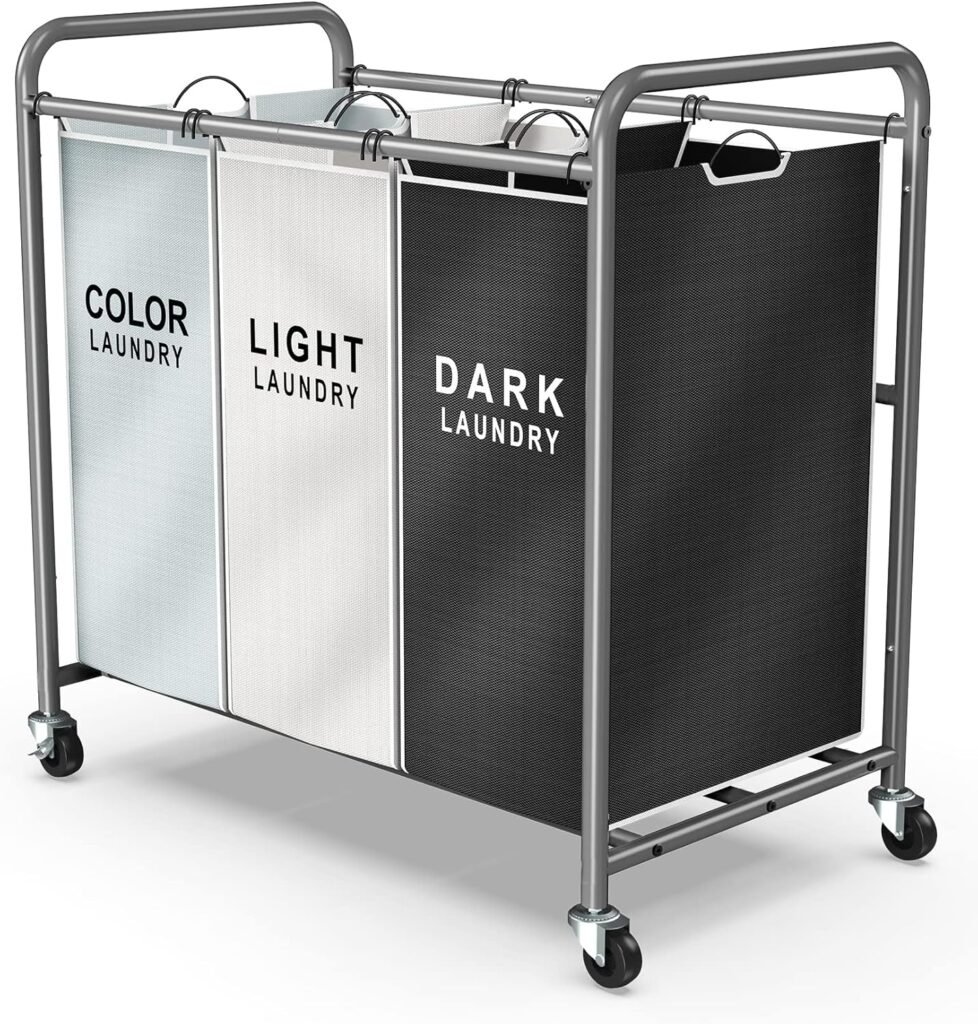
Make Laundry Day Faster and More Organized
- Three separate laundry bags help sort clothes by color, fabric type, or family member
- Rolling cart with heavy-duty wheels makes it easy to move laundry from room to laundry area
- Two lockable wheels keep the sorter stable and secure when parked
- Removable laundry bags allow you to lift out and carry loads directly to the washer
- Durable metal frame and Oxford fabric construction provide strength for daily household use
- Large capacity design is ideal for busy families, apartments, dorm rooms, or shared living spaces
The problem: Laundry piling up
Laundry becomes stressful not because it’s hard, but because it accumulates. Then suddenly you’re facing a mountain that takes half your day.
The time-saving tool: Divided laundry hampers
This is one of those household items that genuinely saves time long-term. Instead of sorting clothes later, divided hampers allow you to separate loads immediately.
Why it works
You eliminate the sorting step entirely.
Laundry becomes a quick, manageable routine rather than an overwhelming chore.
What to look for when choosing one
Look for:
- Separate labeled sections
- Breathable materials
- Lightweight, portable design
Avoid:
- Single large bins that require sorting later
- Fabric hampers that collapse under weight
Small system tweaks like this prevent chores from becoming time-consuming events.
Night Routine Tools for Smoother Mornings

The problem: Rushed, chaotic mornings
Most stressful mornings actually begin the night before. When you don’t prepare ahead, your morning starts in reactive mode.
The time-saving tool: A bedside reset checklist or station
This can be as simple as a small nightstand organizer paired with a short checklist.
It reminds you to:
- Set out clothes
- Prepare bags
- Clear visible clutter
Why it works
Morning decisions are drastically reduced. You wake up to clarity instead of chaos.
Look for:
- Compact organizers with compartments
- Durable materials that hold daily essentials
Avoid:
- Overly decorative organizers that sacrifice functionality
This is a tiny setup that dramatically improves your morning flow.
Digital Organization Tools That Protect Your Focus

The problem: Notification overload
Every notification pulls your attention away from what you’re doing — and it takes minutes to fully refocus. This creates what researchers call “attention residue.”
The time-saving tool: Notification management apps or settings
Sometimes the most powerful tools are invisible. Adjusting notification settings or using focus-mode apps can instantly reclaim hours of uninterrupted time.
Why it works
You reduce constant mental switching — one of the biggest hidden productivity drains.
Look for:
- Simple interface
- Automatic scheduling options
- Ability to block non-essential apps
Avoid:
- Overly complex productivity apps that require constant interaction
Time saved from reduced distractions adds up quickly.
The Most Powerful Tool: The “Good Enough” Mindset
This one isn’t physical — but it saves more time than any gadget.
Many women lose hours chasing perfection:
- Cleaning until everything looks spotless
- Over-researching simple decisions
- Reworking tasks repeatedly
Perfectionism quietly steals time and energy.
The time-saving tool: The 80% rule
Aim for “good enough” rather than flawless. If something is 80% done and functional, it’s complete.
Why it works
You move forward faster, reduce stress, and free time for what truly matters.
Sometimes the best time-saving upgrade is simply lowering unrealistic expectations.
Why These Small Tools Create Big Lifestyle Changes
None of these tools are flashy. They’re simple, practical, sometimes almost boring.
But that’s exactly why they work.
- Reduce daily decisions
- Prevent small problems from growing
- Create predictable routines
- Lower mental load without major effort
Over time, these small shifts compound. Minutes saved become hours. Mental space freed becomes emotional calm. And daily life starts to feel less like a race — and more like something you can actually enjoy.
Start Small, Not Perfect
You don’t need to implement everything at once. Pick one tool that solves a current frustration – Just one.
Maybe it’s the entryway tray.
Maybe it’s a divided laundry hamper.
Maybe it’s a simple weekly meal planner.
Small changes create momentum. And momentum creates lasting ease.
Frequently Asked Questions
What are the best simple tools that save time every day for busy women?
The best options are the ones that remove repeated decisions: an entryway drop zone tray, a reusable meal planner, a visual productivity timer, a simple one-list planning system, and divided laundry hampers.
How do I choose time-saving home organization tools without overbuying?
When choosing one, avoid buying multiple versions “just in case” and look for one sturdy, simple tool that solves a specific daily annoyance (like losing keys or sorting laundry). If it doesn’t reduce friction immediately, skip it.
What should I look for in a weekly meal planner?
Look for dry-erase or reusable formats, a grocery list section, and a layout you’ll actually use. Avoid overly detailed planners that create more work than they save.
How can I save time every day without changing my whole routine?
Focus on tiny systems: a drop zone, one master task list, and a 10-minute evening reset. These small upgrades work because they make the “default” choice the easy one.
A Gentle Reminder
Your time is valuable. Not just for productivity — but for rest, joy, and the little moments that make life feel full. These simple tools that save time every day work because they remove friction from routines.
Saving time isn’t about doing more. It’s about creating space to live better.
And the truth is, you don’t need to fix everything at once to feel that shift. Often, real change starts with something small — one tiny system that removes a daily frustration, one habit that makes tomorrow feel just a little easier.
Maybe it’s finally setting up that drop zone by your door.
Maybe it’s writing down five go-to meals so dinner stops feeling like a daily crisis.
Maybe it’s simply giving yourself permission to choose “good enough” instead of perfect.
Wherever you are right now, you’re allowed to take this slowly. You’re allowed to build a life that supports you, not one that constantly demands more from you. If one idea here stood out, consider trying just that one this week. Small changes have a quiet way of creating big relief over time.
And you deserve tools that quietly make every day easier — especially when you choose simple tools that save time every day.

